Wednesday, December 24, 2025

Writing in the Pacific Northwest with Susanne Bacon AND Merry Christmas!

 There’s a particular kind of hush that settles over the Pacific Northwest in winter—the gray sky, the damp air, the evergreen edges of everything. It can feel cozy… and it can also feel heavy. This year especially, with storms and flooding affecting so many, I’ve found myself holding joy more gently—grateful for what I have while praying for those who are facing loss and disruption.

That’s part of why I love Christmas Eve worship so deeply. Every year, one of my most meaningful traditions is singing carols in a sanctuary full of voices—and then, when the lights dim, singing “Silent Night” by candlelight. It’s such a simple moment, but it grounds me in truth: God’s light shines in the darkness. Jesus is the Light of the World—our Emmanuel, God with us.

In today’s podcast episode of The Truth About Storytelling, I’m joined by Susanne Bacon, author of the Wycliffe novels—stories that capture the texture of the South Puget Sound with a vivid sense of place. Susanne builds a fictional town readers can picture clearly: the waterfront and ferry terminal, an uptown and downtown divided by a steep cliff, the islands and Olympic Mountains on the horizon, and the shifting smells of tide and season.


What we talk about in this episode

  • How “local flavor” builds reader immersion
    Susanne shares how she weaves recognizable locations and regional details into her stories—places like Tacoma, Lakewood, Seattle, Hood Canal, and more—so readers feel like Wycliffe could be just around the bend.

  • Journalism, observation, and character conflict
    With a background in journalism, Susanne talks about being an “outsider-observer,” listening to people’s stories, and how those real human complexities shape fiction (without ever being one-to-one).

  • Landmarks as living metaphor (hello, lighthouse!)
    We dig into the way a landmark can become more than scenery—like the lighthouse in Last Light, which turns into a community pivot point and a symbol of hope, rescue, and faith.

  • Weather and seasonal rituals as story engines
    Storms, floods, gray skies, comfort food, and holiday gatherings—Susanne explains how weather and seasonal rhythms can heighten emotion and reveal character.

  • Staying consistent across a long series
    Susanne shares her practical approach: lists, character notes, and timelines—especially when you’re juggling a town full of recurring people and businesses.


Merry Christmas!!!

Tuesday, December 23, 2025

Seven Writing Prompts Inspired by Damien Larkin's Approach to Worldbuilding

 Writing Worlds That Feel Real

Seven Writing Prompts Inspired by Damien Larkin’s Approach to Worldbuilding

As this post goes out during the week of Christmas, I’ve been thinking about Immanuel—God with us—and how that truth meets us not only in rest and celebration, but in the work of our hands.

Every season looks different. Every year reshapes us. And yet, hope remains present—working quietly in and through what we’re creating, even when we don’t fully see it yet.

One verse that’s been anchoring me this week is Romans 15:13:

“May the God of hope fill you with all joy and peace as you trust in Him, so that you may overflow with hope by the power of the Holy Spirit.”

That sense of hope—present, active, unfolding—connects deeply with the way Damien Larkin approaches storytelling. In our conversation, Damien talked about letting worlds grow organically, layering meaning over time, and trusting that realism and depth emerge through lived experience rather than rigid planning.

The following prompts are inspired by that philosophy. They’re designed to help fiction writers build worlds that feel inhabited rather than constructed.

Choose one. Write for ten to fifteen minutes. Let the world surprise you.


✍️ Fiction Prompt 1: The World Carries Its Scars

Prompt:
Your character enters a place shaped by a conflict that ended long before they were born. No one explains the history outright—but signs of it are everywhere.

  • What physical damage still exists?

  • What customs, fears, or unspoken rules came from that past conflict?

  • How does your character misunderstand this place at first?

Let what remains tell the story.


✍️ Fiction Prompt 2: Terrain Is Not Neutral

Prompt:
Place your character in a landscape that actively resists them—desert, forest, frozen ground, ruined city, or sea.

  • What does the terrain demand physically?

  • What does it demand emotionally?

  • What small detail reveals whether your character belongs here—or doesn’t?

Write the setting as a quiet antagonist.


✍️ Fiction Prompt 3: A Society Built for War

Prompt:
Imagine a culture shaped by centuries of expansion, invasion, or survival.

  • How does this history affect daily life?

  • What does a child learn early that others might not?

  • What happens when someone in this society doesn’t want to fight?

Focus on an ordinary moment that reveals extraordinary cost.


✍️ Fiction Prompt 4: Darkness With Purpose

Prompt:
Write a dark or violent moment that serves a clear thematic purpose.

  • What truth does this moment reveal?

  • Who is changed by it—and how?

  • What would be lost if this scene were softened or removed?

Let darkness illuminate meaning, not overshadow it.


✍️ Fiction Prompt 5: Worldbuilding by Omission

Prompt:
Write a scene where something important is deliberately not explained.

  • What does the character already know that the reader doesn’t?

  • What background detail is hinted at but never clarified?

  • How does restraint deepen the world?

Trust the reader to lean in.


🌿 Writer’s Reflection Prompt 6: Letting the World Grow

(Ideal for journaling or a quiet podcast pause.)

Reflection:
Think about the story or world you’re currently working on.

  • Where are you trying to control it too tightly?

  • What might happen if you allowed it to grow draft by draft?

  • What experiences or histories are shaping it beneath the surface?

Write a paragraph beginning with:
“If I trusted this world more, I would…”


✨ Reflection Prompt 7: Immanuel in the Story

(This is the Christmas-light addition — gentle, optional, and deep.)

Reflection:
Immanuel means God with us—present, not distant.

Consider your current work-in-progress:

  • Where is presence felt more than explained?

  • Where does hope appear quietly rather than triumphantly?

  • How might light exist in your world—not as an answer, but as endurance, companionship, or mercy?

Write a short reflection or scene beginning with:
“Even here, we were not alone…”

Let this be about presence, not resolution.

Listen to the Damien Larkin Interview

Find Damien Larkin's Books


Closing Encouragement

Worlds don’t need to be fully mapped to be meaningful. Sometimes the most honest stories are the ones that allow space for mystery, growth, and hope—both on the page and in ourselves.

As you write this season, may you be filled with peace, steadied by hope, and reminded that the work you’re doing matters—often more than you can see in the moment.


Monday, December 22, 2025

Podcast Notes: Writing Gritty Worlds One Layer at a Time with Damien Larkin


Writing Gritty Worlds One Layer at a Time

A Conversation with Damien Larkin

In today's episode of The Truth About Storytelling, I’m joined by author Damien Larkin for a wide-ranging conversation about realism, military-influenced worldbuilding, and letting stories grow organically.


Damien describes himself as a pantser, someone who discovers the story by writing it—and compares his drafting process to assembling Frankenstein’s monster, layering history, culture, and conflict over time rather than locking everything down too early.

We talk about how his military background influences the way he writes terrain, equipment, and strategy, and why authenticity matters, especially for veteran readers who recognize when details ring true. Damien also shares how darker scenes can be emotionally surprising to write, and how storytelling itself can be a form of processing lived experience.

From dinosaurs instead of dragons to societies shaped by centuries of warfare, this episode is packed with insight for writers who want their worlds to feel dangerous, grounded, and real.

🎧 Listen to the episode
📚 Explore Damien’s books

Friday, December 19, 2025

Creative Pathways: Stories, Poems, and Finding Your Voice

Creative Pathways: Stories, Poems, and Finding Your Voice

Creativity rarely travels in a straight line.

Sometimes it arrives through a story told chapter by chapter.
Sometimes through a quiet poem that gives us permission to speak.
Sometimes through discovering new voices—new worlds—at exactly the right moment.

This winter, I’m inviting readers and writers into several creative pathways that connect story, imagination, and courage.


Fridays on the Podcast: Dark Blade Forged (Fiction Readings)

Every Friday on the podcast, I’m sharing fiction readings from Dark Blade Forged—the opening novel of The Dark Blade Trilogy.

These readings are a chance to:

  • Step into an epic fantasy world of faith, doubt, justice, and choice

  • Experience the story in a slower, more reflective way

  • Listen as scenes unfold aloud—sometimes revealing emotional layers that land differently in audio

Whether you’re already familiar with Dan Torren’s journey or discovering the Dark Blade for the first time, please come and join. 


January Release: To Speak — Poems of Inspired Courage

In January, I’m releasing a new poetry collection:
To Speak: Poems of Inspired Courage

This book grew out of seasons where my voice felt more like embers than flame—quiet, uncertain, but still alive.

To Speak explores:

  • Creativity and calling

  • Courage in imperfect expression

  • Faith, doubt, and grace

  • The slow reclaiming of voice

While Dark Blade Forged explores courage through story and action, To Speak approaches it through reflection and prayerful honesty. Different forms. The same heart.


🚀 Discover New Stories: Sci-Fi & Fantasy Short Reads (On Sale)

Alongside my own projects, I also love helping readers discover new speculative fiction voices—including revisiting shorter works that explore big ideas in compact form.

Right now, I’m part of a science fiction & fantasy short fiction sale—a curated collection of stories and novellas from multiple authors, available at a special price:

👉 Explore the collection here:
https://books.bookfunnel.com/scififanshorts/nmzn2pjhb0

This sale also includes my science fiction novella Liftoff, a story that explores:

  • First contact and human resilience

  • Fear, hope, and the cost of courage

  • Ordinary people facing extraordinary choices

Short fiction and novellas are powerful creative pathways:

  • Bite-sized worlds

  • Focused emotional arcs

  • Perfect for busy readers or creative refueling

If you enjoy sampling new authors—or stepping into a complete sci-fi story in one sitting—this collection is a wonderful place to explore.


🌱 One Creative Thread

At first glance, these might look like separate things:

  • A fantasy novel read aloud

  • A poetry collection releasing soon

  • A sci-fi & fantasy short fiction sale

But at their core, they’re connected by the same invitation:

To step into creativity.
To listen.
To speak.
To imagine.

Whether you’re listening to a chapter on Friday, reading a poem in January, or discovering Liftoff or another new short story today, I hope these pathways encourage you—both as a reader and as a creative soul.

Thank you for walking them with me.

Monday, December 15, 2025

Writing, Community, and The Systems that Support Story: A Conversation with Jemi Fraser


Writing, Community, and the Systems That Support Story: A Conversation with Jemi Fraser


One of the things I appreciate most about talking with other writers is discovering how they actually do the work—the quiet systems, the slightly nerdy spreadsheets, the imperfect-but-effective methods that make creativity sustainable.

In this episode of The Truth About Storytelling, I sat down with Jemi Fraser—author, editor, and long-time community builder—for a conversation that blends heart, craft, and real-world process. Jemi and I have known each other for years through online writing spaces and accountability groups, and this conversation felt like catching up with a writing friend who truly understands the long game.

Story Bibles, Spreadsheets, and Staying Sane

We dig into how Jemi stays organized across multiple projects, including her use of spreadsheets for story bibles, timelines, and character tracking. Rather than rigid systems, her approach is flexible—tools that support the story without strangling it.

One of my favorite moments is when she talks about creating stick-figure maps and rough visual layouts. They’re not meant to be pretty; they’re meant to work. It’s a great reminder that story clarity often comes from simple, imperfect tools that help us see the whole picture.

Research That Lives With the Story

Jemi also shares how she handles research, especially for place-based storytelling. For each book or setting, she keeps a dedicated research file in Scrivener, allowing facts, notes, images, and inspiration to live alongside the draft itself.

This method keeps research from becoming a separate, overwhelming task—and helps ensure that setting details feel integrated rather than dropped in. It’s a practical approach many writers can adapt immediately.

The Art (and Joy) of Naming

We also talk about one of my favorite craft topics: names. Jemi explains how she chooses names that feel grounded in a story’s world—like the unforgettable Phail—and how sound, cultural resonance, and tone all factor into her decisions.

Naming isn’t random or rushed; it’s part of how she builds immersion and emotional connection. Whether you’re naming a character, a town, or a fictional landmark, her process offers a thoughtful framework.

Pop Culture, Personality, and Making Stories Feel Lived-In

One extra thing I love about Jemi’s work—and something longtime readers will recognize immediately—is how she weaves in pop-culture touchstones that make her stories feel both fun and real for today’s readers.

From Star Trek and Star Wars references to nods toward music, media, and especially Canadian singers and cultural figures, these details never feel gimmicky. Instead, they reveal character. They give us small windows into who a person is, what they love, and how they move through the world.

Those references act like shorthand—establishing tone, grounding scenes in a shared cultural language, and adding warmth and humor without pulling readers out of the story. It’s one of the ways Jemi balances depth with accessibility, and it’s a craft choice that quietly does a lot of work.

This episode is for writers who:

  • Love practical, adaptable craft systems

  • Want to stay organized without over-engineering

  • Care about names, settings, and story coherence

  • Enjoy stories that feel contemporary, textured, and alive

You can find more about Jemi Fraser and her work here:

If you’ve ever wondered how small, thoughtful details—from spreadsheets to pop-culture references—help stories feel whole, this conversation is for you.

Find The Truth About Storytelling Episode With Jemi Fraser HERE

Wednesday, December 3, 2025

IWSG - Best Writing Gifts


Thank you, IWSG and all those who are helping this month!


One of the things I love most about IWSG is how generous all the writers are with their time and energy.

For me, the best gifts I've received as a writer haven’t always been physical—though I do love books—but relational and creative.

One of the greatest gifts has been conversation. Recently, I’ve had the joy of hosting thoughtful  conversations with fellow writers on my podcast, including recent interviews with Sean McLachlan, Tara Tyler, and Sherry Ellis. Each episode reminded me that writing isn’t meant to be done in isolation. Hearing how other authors approach craft, worldbuilding, and perseverance has been encouraging and fun.

👉 Link to the RSS Feeds podcast page. The Truth About Storytelling can also be found on Spotify and other platforms.

Another meaningful gift has been time to read purely for pleasure and inspiration. Last year, I received (and collected) a wonderful stack of books—some fiction, some nonfiction, all inspiring. 


These books were an invitation to slow down, to delight in story again, and to remember that feeding the creative well is part of the work.

Ultimately, the best gifts I receive as a writer are the ones that reconnect me to stories, to fellow creators, and to the simple joy of imagining something new.

I’m thankful for this community and for the reminder that none of us write alone.

Merry Christmas and Happy Holidays!


Monday, December 1, 2025

Podcast Notes: Travel, Myth, and Middle Grade Adventure with Sherry Ellis


In today’s podcast episode, I’m joined by Sherry Ellis, an award-winning author of children’s and middle-grade fiction whose stories blend real-world travel, cultural history, folklore, and fast-paced adventure. Our conversation explores how authentic places and sensory detail can bring young readers deeper into a story—and why curiosity and joy matter so much in the creative process.


Sherry shares how her background as a musician and scuba diving instructor informs her writing, especially when crafting believable settings inspired by real locations around the world. We talk about her Bubba and Squirt series, which follows sibling characters through international, time-compressed adventures—each story unfolding within a 12-hour span in a different country. Sherry explains how she balances historical accuracy with imaginative mythology, often weaving in local legends, folklore, and cultural touchstones to enrich each book.


We also dive into Sherry’s writing process, including her use of sensory storytelling, research methods, and distinctive writing rituals. From incorporating authentic sounds and textures to adding classroom-friendly extras like recipes, language notes, and historical context, Sherry designs her stories to be engaging for both readers and educators. She also shares insights she’s gained from critique partners—particularly the importance of geography and realism when working with real-world settings.


Toward the end of the episode, Sherry talks about her upcoming children’s book, Happy Birthday to Us, slated for release in time for America’s 250th anniversary. It’s a delightful concept centered on a child whose birthday falls on the Fourth of July and is currently in the illustration phase.

This was a thoughtful and inspiring discussion about writing for young readers, honoring culture and history, and finding joy in the creative process. I think you’ll really enjoy it.

Find Sherry Ellis at her Website HERE

Monday, November 10, 2025

From Archeology to Authorship with Sean McLachlan


On this week's episode of The Truth About Storytelling, Sean McLachlan and I dive into how travel and history shape the stories we tell. From archaeology to authorship, Sean shares how his global adventures—from Cairo to Bulgaria—infuse authenticity and depth into his fiction. We talk about research, language learning, and the beauty of seeing the world through different cultural lenses. It’s an inspiring conversation about curiosity, courage, and creative life across continents.

Listen Here On The Truth About Storytelling

Conference Thoughts

I recently returned from Author Nation and I am heading into a deep planning sort of mood for the fall. Writing is going strong, but I'm also spending time considering how to use all the tools, or at least a few of the tools, I learned about at Author Nation. I love conferences because they energize me for what's next on the horizon.

Why I write about swords

When I was a kid, I had a chance to speak up about an injustice.

I didn’t have steel in my hands, but it felt like carrying a blade. It took every ounce of courage I had to open my mouth and say the truth out loud. It wasn’t easy. It changed my life.

Kickstarter News

My "Why I write about swords" series is part of my Kickstarter Prelaunch. I'm sharing it in my newsletters and have each of those segments planned out for the next two months. The Dark Blade Trilogy is well on its way to being finished. Book 3 is in progress, Book 2 is getting re-edited, and Book 1 is in the design process for the paperback and hardback this week. Soon, I hope to have some wraparound covers to share, and by December I hope to have a full proof copy of Books 1 and 2, with one to come for Book 3 in January.

Why Prelaunch?

  • It helps Kickstarters gain momentum and recognition on the platform.
  • It gives visibility to the book series.
Please consider heading to my prelaunch page and clicking the "Notify Me" button. This does not commit you to more than an email when the campaign launches. 

Thank you for all of your encouragement and support!


Wednesday, October 1, 2025

Happy IWSG Day and Favorite Stories!


Happy IWSG Day!

Purpose: To share and encourage. Writers can express doubts and concerns without fear of appearing foolish or weak. Those who have been through the fire can offer assistance and guidance. It’s a safe haven for insecure writers of all kinds!

The awesome co-hosts for the October 1 posting of the IWSG are Beth Camp, Crystal Collier, and Cathrina Constantine! 

Our Fearless Leader is Alex J. Cavanaugh!

Our optional question this month is about our favorite stories we've written... 


My Favorite Things I’ve Written (So Far)

It’s always hard to choose a favorite piece of writing — usually, it’s the last book I’ve published. But looking back, here are a few that hold a special place in my heart:

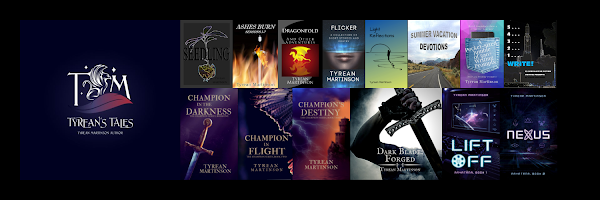
  • Dark Blade Forged (2024) — My latest fantasy novel, and the first in the Dark Blade Trilogy. It’s a story about a cursed sword, justice, and the power of light against shadow.

  • “The Top Hat” (3rd Grade) — One of my earliest stories, and the first time I received real compliments on my writing in school. 

  • Champion in the Darkness (2013) — My debut novel, and the start of the Champion Trilogy. Publishing this book taught me courage in stepping into the world as an author.

  • “Dragonfold” (2009) — My first published short story. Dragons have always inspired my imagination, and this story opened the door to being published.

  • “Seedling” — Another short story close to my heart, about growth, hope, and finding friendship in unexpected places.

  • To Speak (coming 2026) — A forthcoming poetry collection in a newly expanded edition. 


New Podcast Mini-Series

I’ve just launched a new podcast mini-series about the writing life, blending travel, caregiving, and creativity. This week is all about “Cacti, Camels, and Writing.” I share about the last few days in Mongolia and what these experiences taught me about resilience, faith, and the creative journey. Each week, I'll also air two shorter episodes with writing prompts. If you get my newsletter, you'll hear a few stories about riding camels and sitting accidentally on cacti as a kid. 

Here's a picture of me on a camel, along with the core mission team:


And the cactus part, well, it's a metaphor for some stuff (see below), and it came from finding this anonymous quote in my dad's calendar:

\
You may be given a cactus, but you don't have to sit on it.

What I'm Writing Right Now:

Dark Blade 2 (Title may be changing) is finished as a main draft

But I am not ready to release it yet due to some life circumstances. 

I came home from Mongolia to find that I needed to step into a caregiving role for my parents. I am getting help, and I am finding ways to manage this, but I am going to take a beat to figure out how and when to release my next books. They are coming, but not immediately.

Mainly, I am journal writing and writing bits and pieces of Dark Blade 3.

I will let you know as soon as I can work on the release dates, and I may be asking for help. 

How can I keep on podcasting with this? Well, podcasting has been fun. 
And, I'm honestly winging a lot of episodes. Joy + grace = restful enough to do.