Monday, March 15, 2021

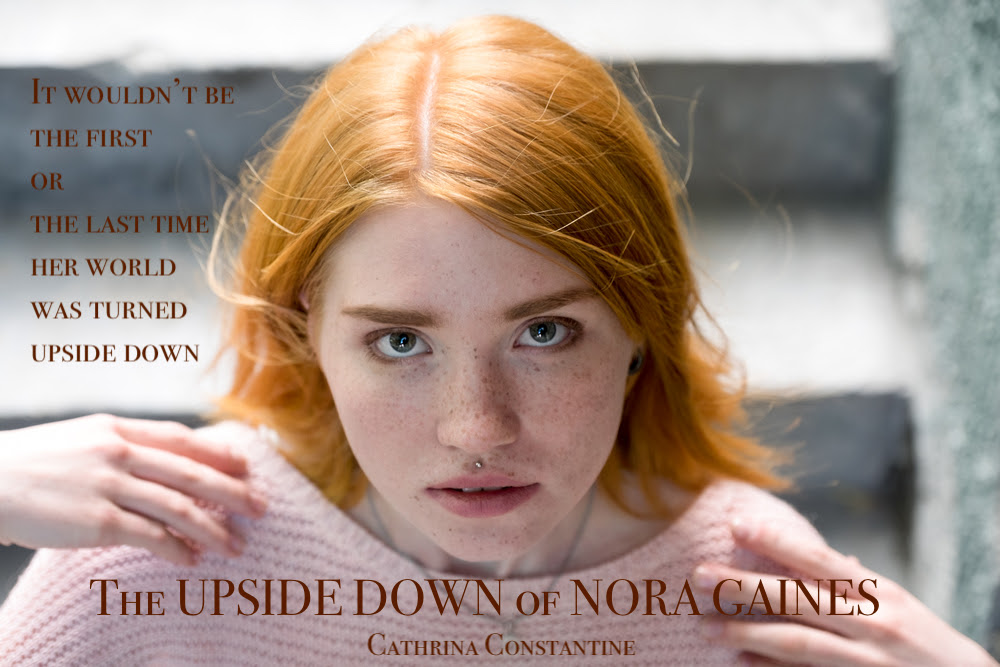
Author Insight March 2021 with Cathrina Constantine and The Upside Down of Nora Gaines


Cathrina Constantine has eight novels published with Crushing Hearts and Black Butterfly, a small independent press, and has received Literary Classics Gold and Silver Awards, the New Apple Medal Award, Reader's Favorite International Awards, and recently, Top Shelf 1st Place award for YA/Mystery. The Upside Down of Nora Gaines is her first attempt of self-publishing her own work. 

Author Insights Interview with Cathrina Constantine

1.     Do you have any advice for aspiring writers?


I believe the most important advice I can offer aspiring writers is perseverance! Persevere in honing your craft, whatever best practices works for you. Read. Read. And read, is a no-brainer. If you are lucky enough to land a publishing contract within a couple of months I applaud you, but typically it takes a writer endless months, if not years of rejections, and with those rejections the need to develop a skin of armor. That's where perseverance comes into play. If you have a polished, wonderful story, remember, it only takes one Yes! 


2.     Tell us about yourself. (like what you do for a living, hobbies, etc..)


At this point in my life I am babysitting grandbabies most of the week, which is a blessing. Besides writing and reading, my other hobbies are baking, cooking, hand-quilting, crocheting, cross-stitching, and gardening. 


3.     What is your writing process? (A special place or how you outline, or do you just jump into it. Or, what you need before you sit down to write: coffee, tea, cookies)


I like to sit near a window with a cup of coffee in the morning and tea in the afternoon, a cookie is essential. I wish I could outline, I can't. I am a true pantser! So I guess, I just jump in IF something, an idea pops into my head. I finished editing a new fantasy story, and since then nothing new has popped. At present, my writing is lacking. I have been mulling over an idea of making this fantasy into a duology because the end does sort of hint at more to come...


4.     From start to finish, how long does it take for you to complete a novel?


I am a turtle writer. It amazes me when I see authors pumping out books every couple of months. I never took creative writing classes. I learned by endless reading, the art of grammar, dialogue and so forth. In the beginning it took a year or two of reworking and revising before completing my first draft. However, I can now have a first draft completed within 6 months time, and then the real work begins. 


Cathrina's Social Media Links:

Blog: http://cathrinaconstantine.blogspot.com

Twitter: @cathconstantine

Goodreads: https://www.goodreads.com/author/show/7179953.Cathrina_Constantine     

The Upside Down of Nora Gaines

Nora has visions of horrific things. Things that lurk in the shadows and feast on bones. After moving with her mother into an old farmhouse, Nora discovers a blank journal that fills itself with an ominous warning. A cursed beast is coming for her and time is running out. When the blood moon rises, so shall the beast.

Local teen, Rebel, has his own trepidations about the house. His parents, both paranormal scientists, were investigating it when they died under mysterious circumstances. His growing feelings for Nora motivate him to battle the ghosts of his past, if it means keeping her safe.

Allies to turn to enemies. Fiction turns to fact. The past and the present collide. All in an epic battle to claim unfathomable power. Can Nora unlock the secrets buried within the farmhouse in time to save herself and those dear to her from a grisly fate?


Thanks for stopping by for an Author Insight Interview, Cathrina!

If you're visiting this blog and you haven't read any of Cathrina's books yet, I recommend them! 


Also, if you haven't connected with me via my monthly newsletter, you can check out the March Edition Here.

Wednesday, March 3, 2021

IWSG March: Risk Taking in Writing and Author Bio Question


It's IWSG Blog Hop Day! A time to consider our writing, to share our insecurities, and to encourage one another! Many thanks to found Alex J. Cavanaugh, the whole volunteer admin team, and the co-hosts this month:  Sarah - The Faux Fountain Pen Jacqui Murray, Chemist Ken, Victoria Marie Lees, Natalie Aguirre, and JQ Rose!

OPTIONAL QUESTION FOR MARCH - Are you a risk-taker when writing? Do you try something radically different in style/POV/etc. or add controversial topics to your work?

(Eek, I have the wrong question up! Sorry. It's actually about reading. Okay, so is this the question for next month? Idk. Oy.) Well, here's the answer for the question I asked myself, I guess. 

In brief, I am a risk taker in my short fiction and poetry. I've tried writing in 1st, 2nd, and 3rd POV for short fiction and poetry. I've tried experimental fiction forms and poetry forms I didn't know existed ten years ago. I've written in present and past tense. I like experimenting with short fiction and poems.

When I write anything longer than 5,000 words, I fall into a pattern of third person point of view in past tense. I tried to write a first person novel in present tense and somewhere between the second and third chapter in my rough draft, I switched back to third person in past tense. I tried rewriting the chapters, and reverted again. I ended up with a mess. So, for now, I am a third person POV writer who experiments in first and second person only in short stories.


AUTHOR BIOS

I have always struggled with author bios. I have said too little, too much, and written things oddly in a way that raised a few eyebrows like in one bio when I described my family and used the phrase: multitalented husband. I didn't mean it the way it was taken, but yes, it was commented on, my daughters were embarrassed, and my husband had a few chuckles.

Here are a few of the bios I've used, and one more at the end. If you have time, please let me know which one you think I should use and why in the comments.

1. The longest one is actually a page on my blog and I decided not to rewrite it here. Let's just say I plan not to go with it in the future.

2. I love words. I love the shape and taste of them. I find refuge in words and stories. I don’t always get it “right,” but I write anyway. It’s in my bones. – Tyrean Martinson

3. Tyrean Martinson lives near Gig Harbor, has a BA in English Education from WWU, works as a property manager and tutor, enjoys walking, and has recently taking up kickboxing. She’s the mom of two college-age daughters who are both into engineering and who don’t like Star Wars or Shakespeare, which means their mom didn’t brainwash them enough, although she really tried. Tyrean is an indie author of several books, both fiction and non-fiction, and has had over 100 short works published. She’s an admin for the Insecure Writer’s Support Group and a member of the SCBWI. She’s on Instagram, Twitter, Facebook, and has a blog at https://tyreanswritingspot.blogspot.com/

4. Tyrean Martinson, lifelong SFF fan, fenced foil and saber in college, once acted in plays, and then became a teacher and writing tutor, which gives her plenty of opportunity to use Star Wars and Marvel movies as examples, and gesture theatrically when she makes a point.

5. Tyrean Martinson (she/her) changes her bio nearly every time she submits a story. Why can’t she decide on the best one? Because decisions are hard. Life is too full of possibilities and wonder. Tyrean writes science fiction, fantasy, non-fiction, terrible poetry, devotions, and any idea that feels shiny with wonder. Her newest novella, Liftoff, was something she wrote to entertain herself during early quarantine, a “popcorn movie” style YA novella she hopes will be fun for readers, too.

6. Tyrean Martinson writes for her old self: the child who found refuge in the library, who found hope in stories, especially those which showed evil defeated by the roar of a lion, a small hobbit with a sword, a faithful friend, a bar of chocolate, or a band of unlikely heroes. Writing is in her soul and her bones, a part of who God created her to be as a daydreamer, creator, teacher, and believer. Tyrean is a member of The Insecure Writer’s Support Group, a critique group, and the SCBWI. Tyrean has written and published The Champion Trilogy, Liftoff, Flicker: A Collection of Short Stories and Poetry, Dragonfold and Other Stories, A Pocket-Sized Jumble of 500+ Writing Prompts, 5…4…3…2…1…Write: Speculative Fiction Prompts; Light Reflections (a poetry chapbook), and Dynamic Writing curriculum. She has also had over 100 short works of short fiction and poetry published in various magazines, ezines, and anthologies. Tyrean has a BA in English Education with additional teaching certificates in social studies and humanities. She has certificates from the Commercial Fiction Class of 2000, and the Advanced Commercial Fiction Class of 2001 from the University of Washington continuing education program. She also continues to take classes and teach classes in creative writing.

*Tyrean pronounces her name with a hard “e” sound in the second syllable. Her parents created this name for her, and only later discovered it was out there in the world already, with other pronunciations.  

What do you think? Are any of them useable? The last one just feels way too long for me. Do I take out some of the specific titles? And, do I include a pronunciation guide or is that a nerdy/rude thing to do?

In addition to these options, there's one where I tried to include that I'm the daughter of an amputee and someone with mental health issues, and have a multi-racial extended family. I was trying to give reasons for writing a story with an amputee and diverse characters, but it all felt wrong and awkward.

Please help, otherwise, this is me, running between options, probably way more confused than The Weekend in this gif:

via GIPHY

Monday, February 22, 2021

Writing, Faith, and the Daily Grind: What I've Learned to Live a Self-Started, Creative Life


As a writer, as a small business owner, and as a Christian, I have every reason to wake up with a smile, but there are days when the day seems to yawn open with a mountain of to-do lists and no end in sight for lengthy projects.

It can feel daunting to do the dailies. I feel the need to hurry through my lists, to cram in more "should-do-this-too." This all stresses me, and I find myself getting less done.

I discovered I need to change my attitude and my daily practice of work, writing, and faith.

There's one method that's been working.

I start my day slower, with prayer, and a plan for self-care and re-energizing moments.

I schedule in self-care moments throughout my day's schedule, in-between writing, work, and life events. 

Examples of self-care: journal writing, prayer, essential oils, massaging my feet and Achilles tendon (actually physical therapy), physical therapy exercises, dance breaks, singing breaks, getting outside for five minutes with my dog, petting my cat and my dog, drinking water, checking my planner and using stars instead of checkmarks to highlight my progress (this is tiny, but it makes a difference to me), creating affirmation lists and "finished" lists, photography, idea generation/dreaming up new ideas (I know I don't need more, but this fills me with joy), conversations with friends, conversations with my daughters, date night with hubs (even though this mainly includes playing cribbage or watching a movie at home, it is good to have it on the schedule), stretching, chair yoga, regular yoga, time on the exercise bike in 5-10 minute spurts, doing the dishes while dancing to music (I know this doesn't sound like self-care, but it is), and creating healthy meals also while dancing to music, writing down 1-5 things I am thankful for, taking a drum break on the ancient drum set in our garage, sending a "thinking of you" text/email to a friend, creating a collage for a vision board, and listening to music. (Did I mention music enough times?) 

I end my day with more self-care by writing prayers in my journal.

Somehow, when I take the time to practice self-care, I actually expand my horizons. I still have the same amount of time, but when I am more relaxed and more hope-filled, I can actually achieve my goals. Self-care helps me regain the energy and attitude I need for a self-started, creative life.

Maybe this seems obvious, but I had to learn it. Heck, I am still learning it. 

How do you handle the daily grind - especially if you are working from home and everyone in your household is?


Highlights from February for me:

  • Zoom celebration for Creative Colloquy, Volume 7.
  • Writing poetry and song lyrics.
  • Podcasts from One Hope Church - Listening daily M-F has boosted my Bible study, and I created two entries of the ongoing series so far.
  • Words on the page. 
  • Labyrinth revision progress.
  • Physical therapy for my Achilles is going well again. (I had a bad plateau moment and had to have a cortisone shot that really hurt a few weeks ago.)
  • Conversations with my daughters.
  • Idea generation in my journal has motivated my "regular" writing.
  • Editing the novel of a new author - his enthusiasm is contagious!
  • #365gratitude - I don't always post my entries, but I have been writing them down. When I do post, it's fun to read everyone else's posts. 


Monday, February 15, 2021

World Building for Science Fiction and Fantasy Authors: Start with Questions


Welcome to World Building for Science Fiction and Fantasy Authors

A Craft and Fandom Series


Start with Questions

One of my favorite parts of writing science fiction and fantasy is idea generation through questions.

These questions always start with the basic questions and build from there.

For example: 
A Group of Fantasy Questions Based on a Vase of Fake Flowers on my Desk:
  • What if the flowers on my desk were home to a particular species of tiny dragons? 
  • What if these flowers were picked by an unsuspecting human from an fairy dragon preserve hidden alongside a farm? 
  • What if the tiny dragons are then seen by a human child? 
  • Will the laws of fairy and human be at risk? What are those laws? 
  • Why would fairy dragons hide from humans? Why would they live anywhere near them? 
  • Will the human child need to help the dragons? Will the dragons help the child? 
  • What kind of trouble could they get into if the tiny dragons and the human child become friends? This is presuming the tiny dragons can communicate with the human child. 
A Group of Science Fiction Questions Based on the Dark Outside my Window as I Write:
  • What if aliens crash-landed and are camped out in the wooded area behind my house?
  • Why would aliens actually want to camp behind my house? 
  • Would I ever interact with them? What would that look like? Okay, maybe I'm too boring of a subject for alien interaction, but what if...the aliens decided to camp out and do some human research on a familial unit they thought was stereotypical, but then it turned out the familial unit was actually a group of criminal masterminds living together to disguise their nefarious deeds? 
  • What nefarious deeds? I'm not sure yet. 
  • What if the aliens decided to "help" the subjects of their studies with the unknown nefarious deeds? Would they help/hinder/cause humorous havoc? 
  • How would alien technology and human technology mix?
My first tip for World Building for Science Fiction and Fantasy is to generate lists of questions. Use the basic questions we're all familiar with and build on them.
What
What if
Where
When
Why
How

Repeat, and continue the idea generation with questions about the answers found for the first set of questions. 

Exercise #1 Start with Questions for World-Building

Ask yourself a question based on something you can see/interact with in your immediate surroundings mixed with something outlandish, fantastical, magical, technological, science fiction-based, or alien-based. Try for at least seven questions, all building on the first one.
Yes, this can lead you to write ideas like mine above which are a mix of real world and fantasy or science fiction. However, we'll change this up with Exercise #2.

Do not panic if some of your ideas feel like tropes the first time around. It's okay. 
First, tropes are useful. 
Second, tropes can be bent and reshaped into something new as you continue to ask questions.

Exercise #2 Rewind and Twist the Questions

Go back through your list of questions. Ask yourself the following questions:
  • What if I change my initial setting? 
  • Where else can this take place?
  • When else can this take place?
  • What is the most important element of this idea? (The interaction, the magic, the tech, the characters?)
  • Do I want to age up or age down my initial character ideas, if I have some?
  • If I have a trope, how can I twist it to make it fresh?
  • What tone do I want to use for this idea? (Serious, humorous, dramatic, adventurous, romantic, etc)
  • What do I like about the idea forming so far? What don't I like?
Note: If you don't like any of the ideas so far, go back to exercise #1 and start again. Don't waste too much time on the initial idea unless you love it. Each of these exercises should take less than 15 minutes, ideally, until you land on something that really gels, or you just find yourself itching to start the story or ask more questions. 


Do you have any questions?
Ideas for idea generation?
Please let me know in the comments. I'm building this series of posts with the hope of turning them into a World Building Guide at some future date. 


Monday, February 8, 2021

Author Insights: Beth Camp and The Seventh Tapestry

Please welcome guest author Beth Camp for the first Author Insights Feature of 2021!


1.     Tell us about yourself.  

As an older-than-average writer, I used to worry about what I’d do after I retired from teaching writing and humanities at a two-year college. I’d always wanted to write, but I’d always worked – so there never seemed enough time for writing, not with 60 hour weeks! This is it, I thought. When I retire, I will write. To prepare myself for this new career, I took a creative writing class. My plan was to re-imagine a story about a serial killer that I’d drafted. My teacher had other ideas. On the first day of class, she announced, “Write about anything you want, but no violence.” I had to start from scratch! My new project led to my first publication about (wait for it) mermaids, though I discovered along the way that even mermaids have a dark side. 


Aside from writing and quilting, my other obsession is travel. I would rather live out of a suitcase nearly anywhere than stay at home. Luckily, my husband, Allen, feels the same way. In fact, neither one of us can rattle the suitcases, because the other one will say, “Let’s go!”

2.     How did you come up with the idea for The Seventh Tapestry

We had rented an inexpensive flat for several weeks in Paris and were busy visiting museums when I first saw the six magnificent Lady and the Unicorn tapestries at the Musée de Cluny. Discovered in an attic in 1841, these six tapestries were woven in Flanders sometime around 1500. Researchers know who had commissioned these tapestries, but questions remain over who they were for, why they had been created, and what they really mean. A few years later, Allen and I traveled to Scotland for a month to do research for Standing Stones (historical fiction, 1840’s). There we visited Stirling Castle where King James V once lived. Interestingly, James V (his reign 1513-1542) loved tapestries, had commissioned many of these delicate and beautiful works, and, we learned, the unicorn is a symbol of Scotland, appearing on the Scottish Royal Arms until 1603. Then we read of James V’s ‘summer queen,’ and the story of The Seventh Tapestry began.

3.     What is your writing process? 

 Mornings are best. Most of the time (even during pandemic), I begin writing even before breakfast. Just go to my computer and dive in for a few hours. Later in the day, I may pick up some more time. Typically a ‘pantser,’ I do now use some strategies to keep me organized. 1) Before actually writing the story, draft a blurb, short bios of characters and places, and a working outline. Update this through the writing process. 2) End each writing session with a ‘what’s next?’ list of questions/ideas. 3) Keep a separate ‘story notes’ file for research, unanswered questions, and deleted scenes. 4) If I’m stuck, ask what my main character would say or do in response to conflict/action/plot twist. 

4.     From start to finish, how long does it take for you to complete a novel? 

Sadly, writing my stories seems to take forever – typically three years from start to finish. While preliminary research may fuel the story, I’m distracted continually by bits of history/setting. I’m never satisfied with one round of editing. Maybe by three or five different passes on getting the story ‘right’.

 5.     Do you have any advice for inspiring writers? 

Try to write before distractions (job, partner, kids, normal emergencies?) intervene between you and your writing. You know when your most productive writing time occurs. Your time as a writer is precious.

Consider keeping a journal. I use those very inexpensive black/white composition books that easily slip into my bag. That journal allows you to explore ideas, capture inspiration, list questions, and even draw (characters, maps, timelines). Yes, we can do all this on the computer, but the tactile sense of putting words to paper slows the brain down. You may be surprised at what you discover!

My other advice? 


--Keep learning from other writers, whether you read their self-help writing books/articles/blogs, take workshops, share drafts with other writers f2f or online, or build friendships through being active in national, regional, or local writing associations. Online writing groups might include: The Internet Writing Workshop, Insecure Writers Support Group, or National Novel Writing Month, among many others.
--Make a commitment to write every day, which means 5 out of 7 days (or what you decide). Don't fret if you can't write on any one day (or meet your goals). Work sideways. If the words don't come, do research, write character sketches, look for funny slang. The internet can be inspirational as much as it can be a distraction. If word count goals don't work, change them for what is achievable for you. Celebrate every success!
--Most important of all, trust those stories that bubble up inside of you. No one else can tell your stories. Nurture them and your creativity – and enjoy every bit of being a writer, whether you start with poetry or flash fiction, or jump right into a novel.

ABOUT BETH CAMP

Beth Camp attended eight high schools and worked her way through as many colleges on the west coast of the U.S. before earning her master's at the University of Oregon. Her careers as an international banker, a corporate consultant, and a writing teacher and English Department Chair at the community college level have fueled her passion for writing historical fiction.

A love of international travel led Beth to Scotland to research and then write her trilogy about the McDonnell family as they struggle with eviction and relocation during the Industrial Revolution. Standing Stones (2010), introduces the McDonnell family in Scotland. Years of Stone (2014), set in Australia, tells the story of Deidre who follows her fiancé, Mac McDonnell, a transportee sent to Van Diemen's Land in Australia. In Rivers of Stone (2017), Catriona McDonnell disguises herself as a boy to cross Canada during the fur trade era. 
The Seventh Tapestry is Beth’s first art crime mystery, set in Edinburgh and Paris. During this time of pandemic, Beth compensates by diving into writing and research – and working on her next art crime mystery, this time set in Egypt. 

Website: https://bethandwriting.blogspot.com/
Twitter: https://twitter.com/bluebethley
Facebook: https://www.facebook.com/BethCamp.author
Amazon Author Page:  https://www.amazon.com/Beth-Camp/e/B001KD7GUI
Amazon page for The Seventh Tapestry: https://www.amazon.com/gp/product/B08GJ8VRGL

THE SEVENTH TAPESTRY


Genre: Mystery/Art Crime/Romantic Suspense
Publisher: Beth Camp
Length:  295 pages
Format: E-book (ASIN : B08GJ8VRGL)
Paperback (ISBN-13 : 979-8639835421)
Publication: 21 August 2020

The Seventh Tapestry by Beth Camp – Art Crime Mystery

When precious artifacts go missing at the Museum of Medieval Art in Edinburgh, American Sandra Robertson, a newly hired curator, is immediately under suspicion. 

But, when she’s asked to help find out who’s involved, Sandra ignores her attraction to Neil McDonnell, art crimes investigator assigned to the case, and gets to work. After a priceless 16th Century tapestry goes missing, Sandra begins to receive threatening phone calls. 

What will they risk to recover the missing artifacts, stop the thefts, and find out who’s behind a series of mysterious deaths? Do Sandra and Neil have a future together?

The Seventh Tapestry takes readers on a journey from a small medieval museum troubled by theft into the dangerous world of international art crime.

“Filled with art history, suspense, criminal activity and just enough romance, this novel will pull you in and you won’t want to put it down until you read the last page.”
--Chris, GoodReads.

“Sandra and Neil make a great team, thwarting the protagonist and growing closer in the process of doing so. Intrigue, danger, determination make for a "can't put it down" book.”
--Sally, Amazon

EXCERPT FROM THE SEVENTH TAPESTRY

SANDRA’S OFFICE PHONE rang; the sound broke her concentration as she studied the printout of museum holdings.

“Director Hadley would like to see you upstairs,” said Margaret. “Now.”

“I’m on my way.” Sandra rolled the kinks out of her neck and stared at the low-hanging ceiling in her office. She loved working for the Museum of Medieval Art, but she wondered what he wanted. She hotfooted it through the basement employee lounge, closed the door to the tiny, iron-scrolled elevator with a click, and hit the button for the third floor. She tucked her honey-blonde hair behind her ears and wished for the gift of clairvoyance.

Margaret ushered Sandra into the inner office overlooking an expansive view of Princes Street Gardens below, but Sandra’s attention was on Mr. Hadley, impeccably dressed in a gray suit with matching vest, and his guest. Both rose as she entered.

“Sandra, please join us. This is Neil McDonnell of Scotland Yard’s Art Crimes Unit. I’ve told him you are relatively new to our Curatorial Affairs department.”

The tall man next to Mr. Hadley nodded, his face still; his hand reached out to shake hers, firm and warm. Sandra automatically catalogued him: Hair a little long, tall, lanky, sure of himself, well dressed in a casual way, sweater vest and tie with a gray tweed jacket. Perhaps too good looking?

She sat on the edge of one of the chairs near a settee and waited.

“Tell us what you think of our main storage area.” Mr. Hadley’s eyes looked bloodshot; his expression not as welcoming as it was on her first day at the museum.

“The storage area seems adequate, so far.”  Sandra paused, not certain what to say.

“Were you alone in the storage area,” Mr. Hadley glanced at his notes, “on the nights of Tuesday and Thursday last week, after museum hours?”

“Yes, sir. I was working on my preliminary collections report for Roger, I mean Mr. Ferguson. I was assured I could do so.”

“And your findings?” Mr. Hadley glanced at the man seated beside him.

“I’m still working on my report, but . . .”

“Can we see your findings?” Neil interrupted, his sharp green eyes missing nothing.

“Yes, of course,” said Sandra. “The report is little more than a list of artifacts and locations just now. I can go downstairs to print them out.”

Mr. Hadley shook his head. “Tell Margaret the file name. She will print it out for you.”

Within minutes, Margaret handed out copies of Sandra’s database report.

“I haven’t finished my review of the first floor storage unit,” Sandra explained.

Mr. Hadley waved his hand to cut Sandra off. “We can see your progress. Notice this, McDonnell.” He tapped on something in her report. “Do you have any other comment on the Saxon axe hammer than what is here?”

Sandra shook her head. “No, I don’t think so.”

“Was the hammer in Case 24 when you last visited?”

“Yes, sir.”

“Ah,” said Neil. “Can you explain why that item is no longer in its case?”

“What? It’s missing?” Sandra’s stomach lurched. While not a major item in the collection, the hammer was still valuable. But nothing should be missing. “What do the surveillance tapes show?”

Mr. Hadley and Neil exchanged a glance.

“The cameras were deactivated,” said Neil.

“How is that possible?” asked Sandra.

“That is just what we were going to ask you,” said Mr. Hadley.

The two men gazed at Sandra as if they expected an answer.

Sandra lifted her hands. “I know nothing of this.” 


To discover more about Beth and more of her writing, check out her author links above or go right here:
Historical fiction and more on Beth's Amazon Author Page 
Beth's Newsletter!

If you are a reader, Author Insights will be featured once a month in 2021.
If you are a writer, please contact me at tyreantigger (at) gmail (dot) com if you would like to be featured for an Author Insights feature in 2021.